Updated 28 August 2026
Why we built voice-first: designing for the city we actually live in
Most apps assume everyone reads comfortably. In small-city Pakistan, that assumption excludes millions. Here's how Kamalia was designed differently.
KEWritten by
Kamalia Enterprises
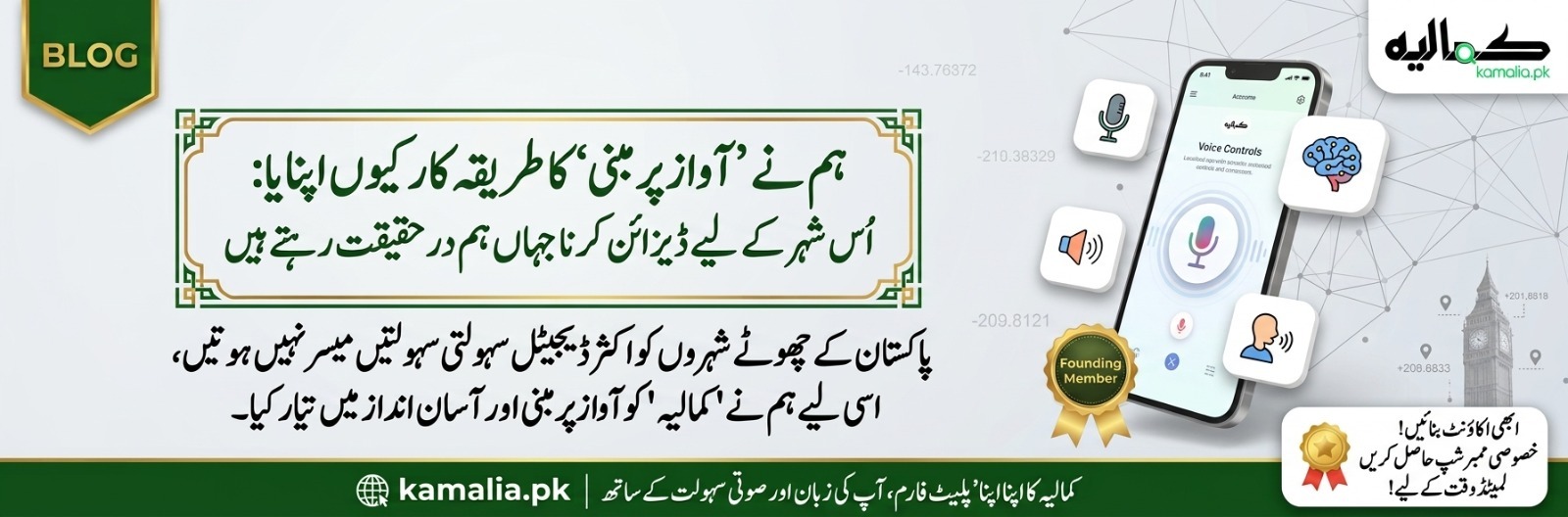
Here's a design decision no Silicon Valley playbook would suggest: the most important button in our search bar is the microphone.
Around 60% of our city reads comfortably; in the surrounding villages, far fewer. The standard tech response is to pretend otherwise — build the same text-heavy app and wait for literacy statistics to change. We made the opposite bet: change the app.
So on Kamalia, you can speak instead of typing — tap the mic and say what you need in the words you'd use in the bazaar. Reviews can be recorded as voice notes and count exactly the same as written ones, because a shopkeeper's mother has opinions about clinics too. News can be listened to. The interface leads with photographs and icons — a real hospital building, a school gate — with Urdu labels supporting the image rather than replacing it. And the whole thing runs in Urdu first, with Punjabi audio, because that's what our city speaks, in that order.
None of this is charity design. It's just accuracy — building for users as they are rather than as spreadsheets wish they were. And it happens to be a strategy: the platforms that ignored small-city Pakistan for fifteen years all made the same assumption about who's worth designing for. Their blind spot is our market.
There's a version of "digital Pakistan" that means glass towers in three big cities. We're building the other version — the one where a farmer checks cotton rates by voice on a five-year-old phone, and it just works. One city at a time, starting with ours.
Comments
Please sign in to join the conversation.
Sign in